Most Pennsylvania homeowners have seen it: a garage floor covered in tire marks, a basement slab that turns to dust every time someone sweeps it, or a patio with a crack that seems to grow a little longer every winter. Sound familiar? These are the kinds of problems that get Pennsylvania homeowners looking into residential concrete coatings in the first place. Once it’s done, almost everyone says the same thing: they wish they’d called sooner.
At Fortress Floors, we run into these exact problems on job sites all over the Plymouth Meeting area, week after week. Here’s the thing about bare concrete: it looks great on the day it’s poured, but it’s not built to stay that way – especially not through a Pennsylvania winter. The fix, though, is a lot simpler than most homeowners think.
The Hidden Reason Your Concrete Keeps Cracking, Staining, and Wearing Down
Concrete is porous. Honestly, that one fact explains most of the problems homeowners deal with a year or two later, even on a slab that looked completely solid when it was poured.
Oil, road salt, and moisture all soak into concrete. After a couple of Pennsylvania winters, that trapped moisture freezes, expands, and starts cracking the slab from the inside out. Add daily foot traffic or a car parked there every night, and you get pitting, flaking, and that fine concrete dust that shows up again no matter how many times you sweep it away.
Got a basement? You’ve probably seen a chalky white residue on the floor during humid stretches. That’s efflorescence, and it means moisture is working its way up through the slab. Ignore it long enough, and it turns into dusting, then into the kind of damp, musty air that mold actually likes. The EPA’s own guidance on mold and moisture points to the exact same root cause we see in basements all the time: trapped water that never had anywhere to go.

What Actually Changes Once a Coating Seals the Slab
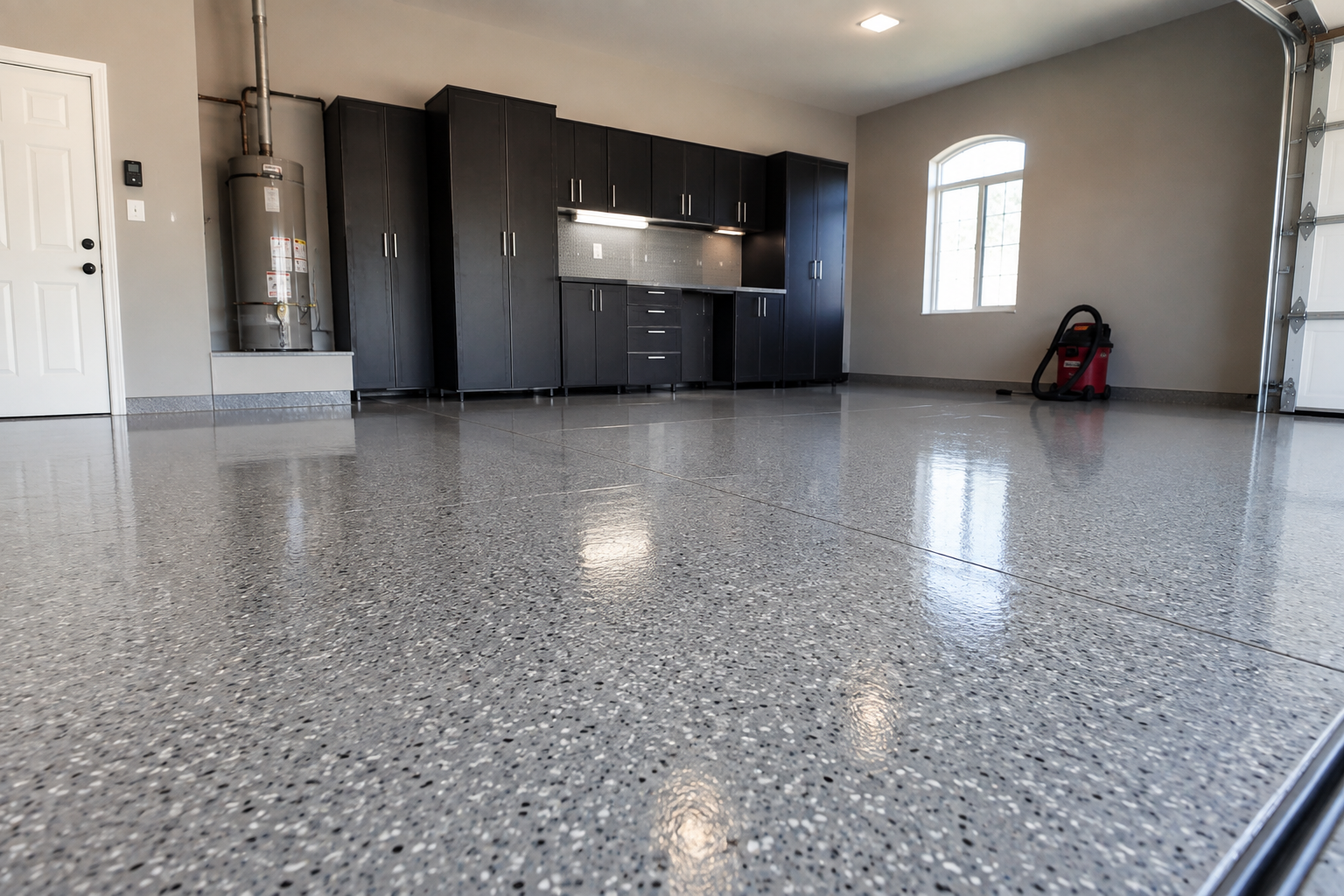
A good coating isn’t paint. It’s not sitting on top for looks. Polyurea-based systems bond right into the slab itself, sealing out moisture and flexing along with the concrete as temperatures swing through those freeze-thaw cycles. That’s the real reason a properly installed coating holds up for years while a store-bought sealer tends to give out after a season or two.
Durability is only half of it. A sealed floor is just easier to live with day to day. Spills wipe up instead of soaking in, there’s no more dust because there’s no raw, exposed surface left to shed it, and a cleaning job that used to eat up your Saturday now takes about five minutes.
Safety improves as well, and it’s easy to forget about until it actually matters. Most professional systems come with a slip-resistant texture built in, which counts for a lot in a garage that gets wet from snow and rain, or a basement laundry area where water tends to collect.
Garage, Basement, or Patio: Why the Same Coating Rarely Works Everywhere
This is where a lot of DIY jobs go sideways. Someone buys one product and uses it in every room, then wonders why it held up fine in the garage but failed in the basement within a year. Every room has its own moisture, temperature, and traffic pattern, so the coating has to match the space it’s going into.
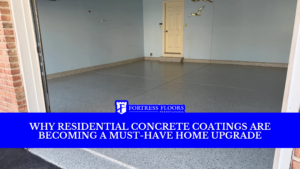
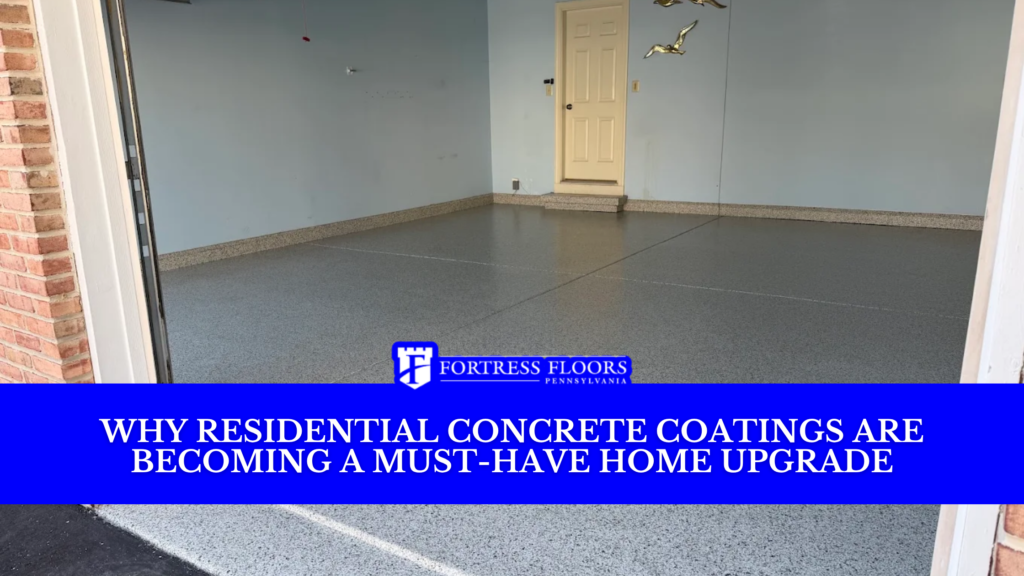
- Garage floors take the worst of it: hot tires, dropped tools, chemical spills, and daily wear and tear. That calls for the toughest system available. A polyurea base coat with a polyaspartic top coat resists impact and cures fast enough that you can usually park in the garage that same day. If you’ve been searching for a garage floor coating because your floor is cracking, staining, or just looking tired, this is usually where people start.
- Basements are a different animal. The moisture problem often comes from below rather than above, so the coating needs to handle water pushing up through the slab, not just resist a few scuffs on the surface. A vapor-tolerant basement floor coating stops the peeling and bubbling you’d otherwise get from plain paint or a cheap sealer, and that matters a lot in older Pennsylvania homes that were never built with a modern moisture barrier to begin with.
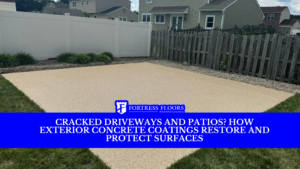
- Patios, sunrooms, and other living spaces sometimes call for something else entirely. If you like the natural concrete look and don’t want color or texture, concrete polishing is worth a look. It grinds and refines the existing slab into a smooth, reflective finish and adds protection without changing how it looks. Want color or texture instead? Take a look at our floor coating color and finish options before deciding.
What Homeowners Across Our Service Area Are Actually Asking For
Going by the jobs on our schedule right now, polyurea and polyaspartic systems are by far the most requested option for garages and other high-traffic areas. People like the fast cure time, and the flexibility handles our temperature swings a lot better than the older coating types ever did.
Polishing tends to come up most in remodels where the goal is a clean, natural finish rather than a bold color change.
There isn’t one right answer for every home. It comes down to the room, how much traffic it gets, and how much moisture is already sitting in that slab. That’s exactly why we’d rather come out and do a free on-site assessment than throw out a number over the phone. A phone call can’t tell us what’s actually happening under your floor.
From Bare Slab to Finished Floor: What Happens on Installation Day
A lot of the hesitation we hear from homeowners comes down to not knowing what to expect. It’s a lot more straightforward than people assume, and most of it happens in a single visit. Here’s what our coating process looks like:
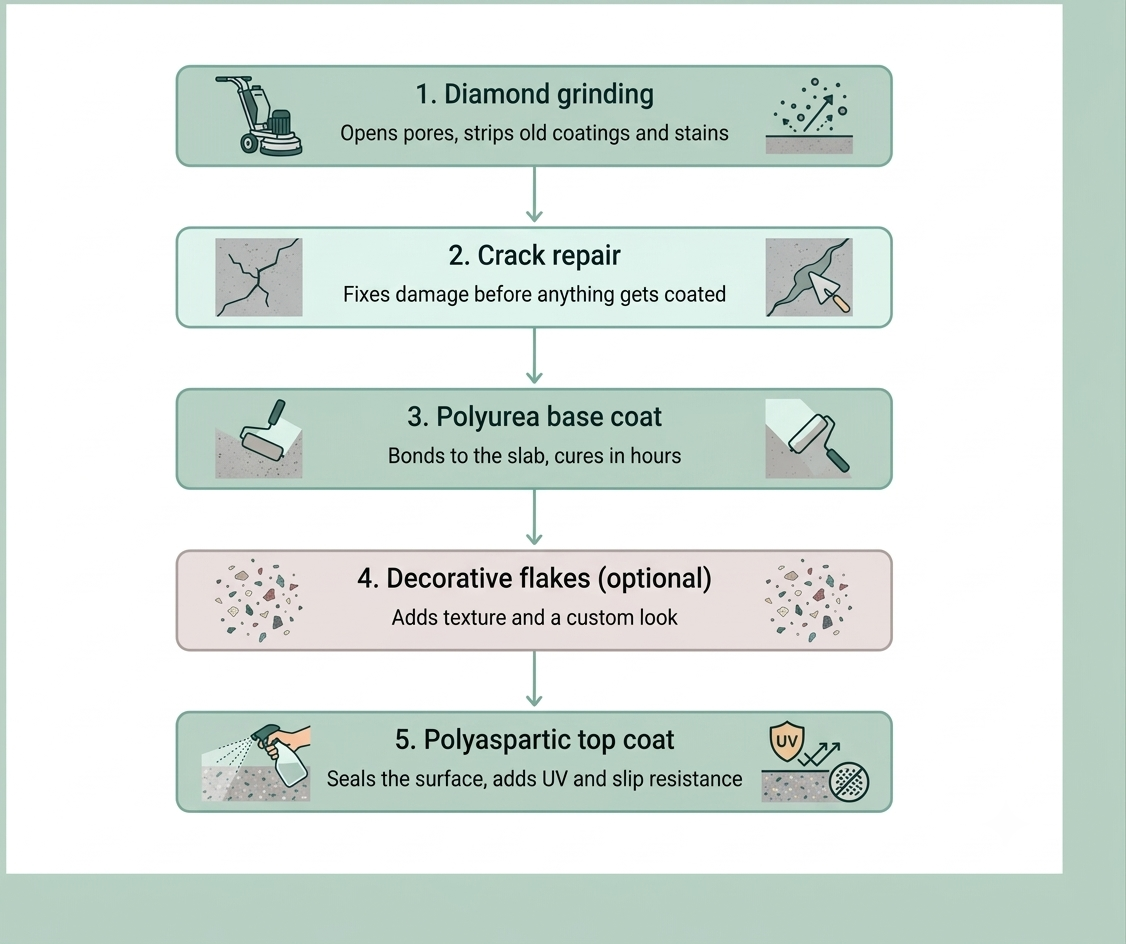
- Diamond grinding opens up the concrete pores and strips away old coatings, oil stains, and rough spots so the new coating has something actually to bond to.
- Crack repair happens next, before we apply anything. Coating over a damaged slab just hides the problem instead of fixing it.
- Polyurea base coat goes down and bonds directly to the concrete, curing in hours instead of days.
- Decorative flakes, if you want them, get added at this stage for extra texture or a more custom look.
- Polyaspartic top coat seals everything up and adds UV stability and slip resistance.
Most floors are usable again by the end of the day. If you’ve ever wondered why a store-bought coating kit failed after a year, it almost always comes back to that first step, proper prep. Most homeowners can’t judge that on their own, which is exactly where an experienced local crew earns its keep.
Why a Coating Rated for Arizona Won’t Survive a Pennsylvania Winter
A coating that holds up fine in a warm, dry climate won’t necessarily hold up here. Pennsylvania throws a lot at concrete: heavy road salt in winter, repeated freeze-thaw cycles, and humid summers that stress a coating from both directions all year round.
We build every recommendation around what actually happens in this climate, not some generic national playbook. We pick systems tested for cold-weather installation so your floor isn’t the one peeling by next winter.
The Local Team Pennsylvania Homeowners Call Before the Cracks Get Worse
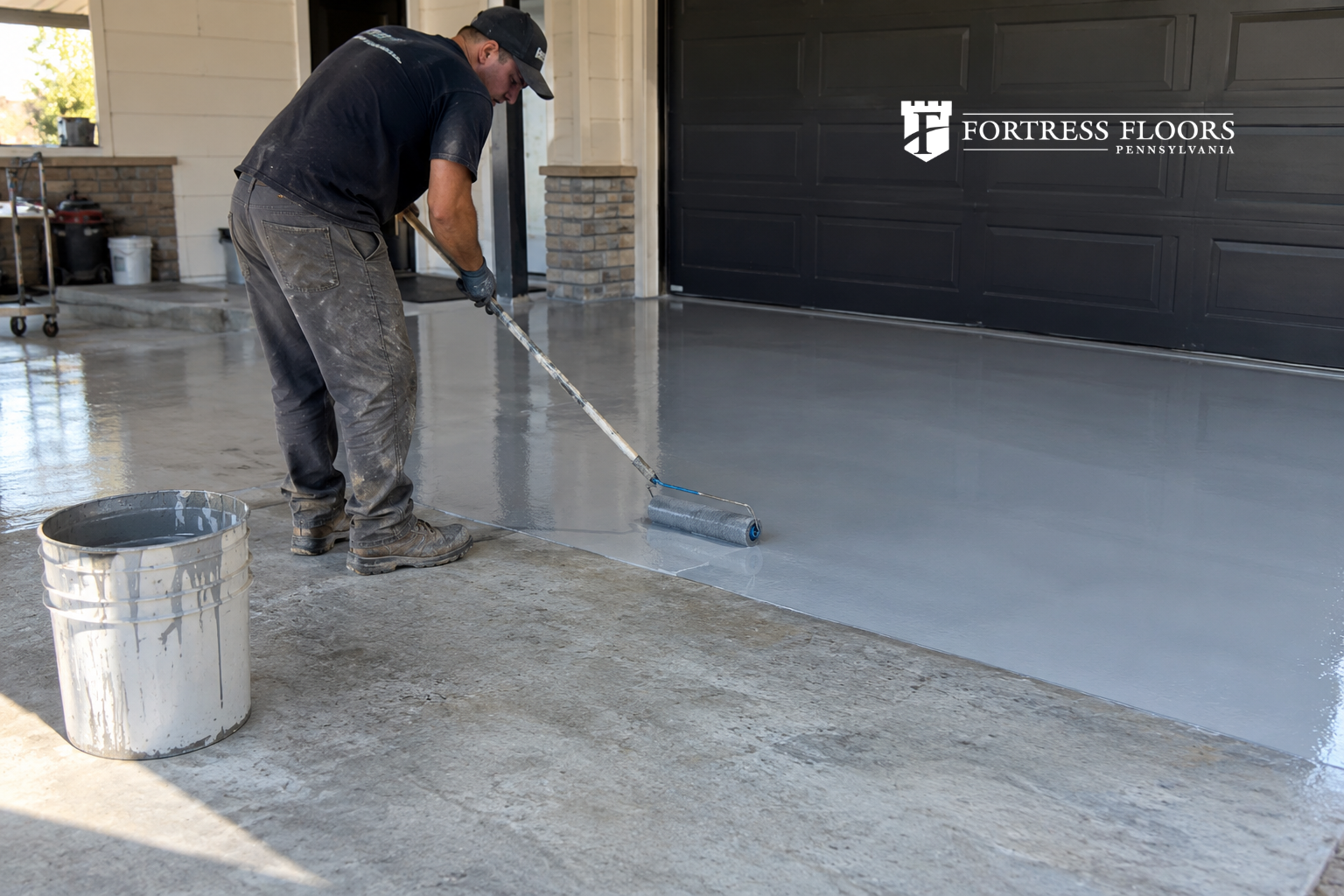
We’re family-owned and operated, and we’ve spent years installing residential concrete coatings for homeowners across our Pennsylvania service area, including:
- Plymouth Meeting
- West Chester
- Wayne
- Radnor
- Villanova
- Malvern
- Downingtown
- Exton
- Chester Springs
- Pottstown
Every project starts the same way: an in-person, free on-site assessment where we check the slab’s condition, moisture levels, and how you actually use the space. That way, the coating fits your home instead of the other way around.
Our installations come with a lifetime warranty. That kind of confidence only comes from doing the prep work right and using quality materials, not from cutting corners to save a day on the schedule.
Stop Patching, Start Fixing the Problem for Good
A cracked, stained, dust-shedding concrete floor isn’t something you have to keep living with. Professionally installed residential concrete coatings, built for Pennsylvania’s climate and put down with real surface preparation, fix the problem at the source instead of covering it up for another season.
Contact Fortress Floors today for a free on-site assessment. Let’s figure out which system makes sense for your garage, basement, or patio.