Commercial floors rarely get attention until there’s a gouge from a forklift, an oil stain that won’t come out, or a near miss by the loading door on a rainy morning. Commercial concrete floor coatings are one of the more practical ways West Chester businesses deal with those problems before they turn into bigger ones.
Plenty of local properties fit that picture, whether it’s a warehouse off Route 202, an auto shop in West Goshen, or a storefront in West Chester. Concrete holds up the building just fine. Its surface is another matter, and that’s where a good coating earns its keep.
Why Bare Concrete Struggles in Commercial Spaces
Concrete handles weight extremely well, which is why nearly every commercial building sits on it. The top surface is the weak point. Untreated concrete is full of tiny pores, and whatever lands on it, whether that’s oil, coolant, or dirty mop water, slowly works its way in and stays there.
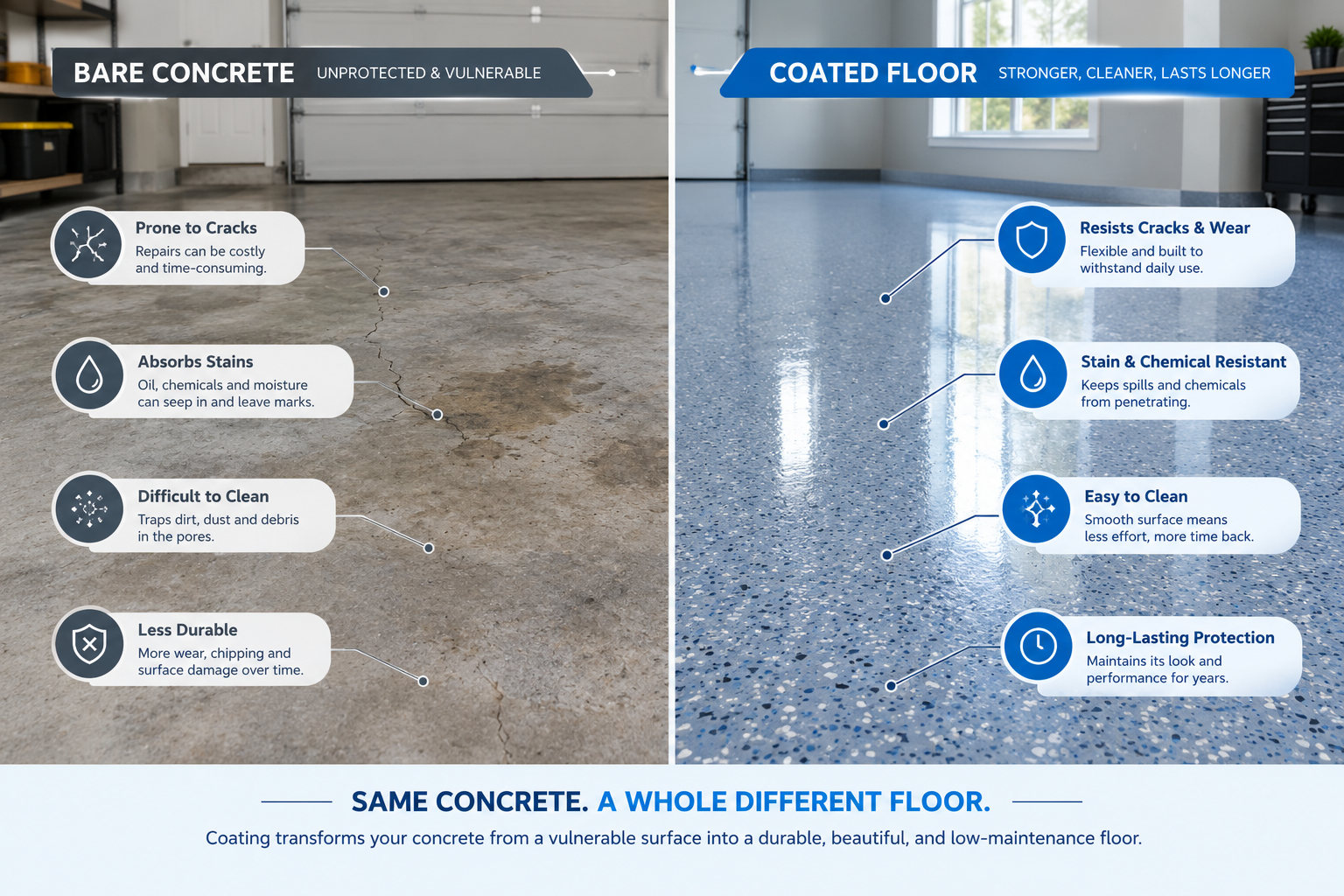
Our winters don’t help. Chester County sees its share of freeze-thaw cycles, and a lot of road salt ends up indoors on tires, work boots, and pallet jacks. Deicing chemicals can make freeze-thaw damage to concrete considerably worse, and that damage usually shows up as scaling, pitting, and spalling. A commercial concrete floor coating keeps the salty slush on the surface where someone can mop it up instead of letting it soak into the slab.
Safer Floors for Employees and Customers
Slips and falls are among the most common workplace injuries, and the floor is usually part of the story. OSHA’s walking-working surfaces standards require employers to keep floors in clean, orderly condition and free of hazards like leaks and spills. That’s tough to do on bare concrete, which gets surprisingly slick once it’s wet or covered in fine dust. A coated floor can include broadcast flakes or a light aggregate that gives shoes something to grip, while staying smooth enough that a mop still glides over it.
Lighting is the piece people tend to overlook. A lighter floor bounces more light around the room than gray concrete does, which makes aisles and trip hazards easier to spot. Many shops also use the coating as a base for painted walkways and forklift lanes. None of this removes every risk, of course, but it makes a real difference for the people who spend all day on that floor.
Durability That Holds Up to Daily Wear
Think about everything that crosses a commercial floor in a normal week: delivery carts, rolling racks, the occasional dropped wrench, maybe a forklift making the same turn a hundred times a day. A durable commercial floor coating takes that punishment so the concrete underneath doesn’t have to.
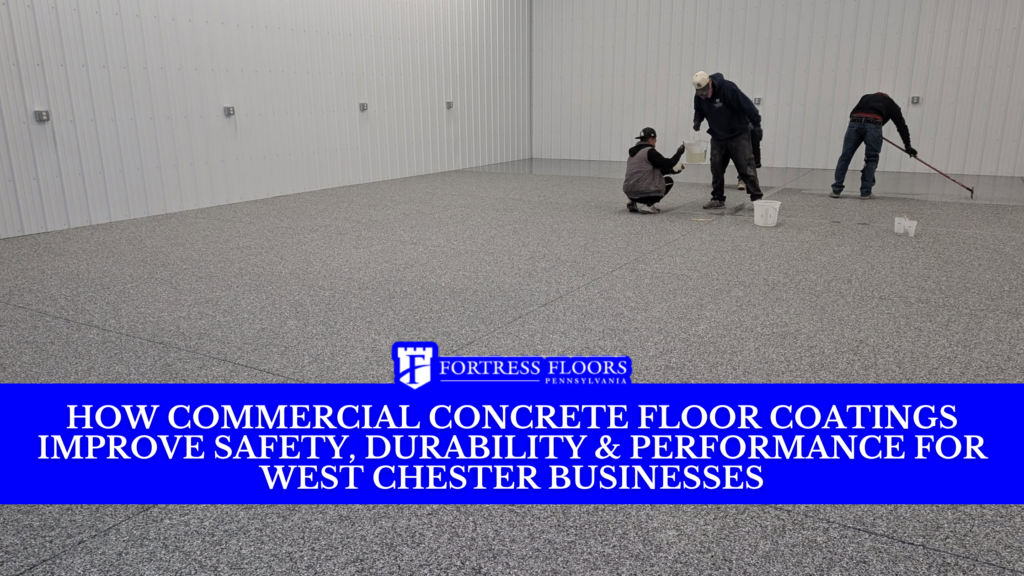
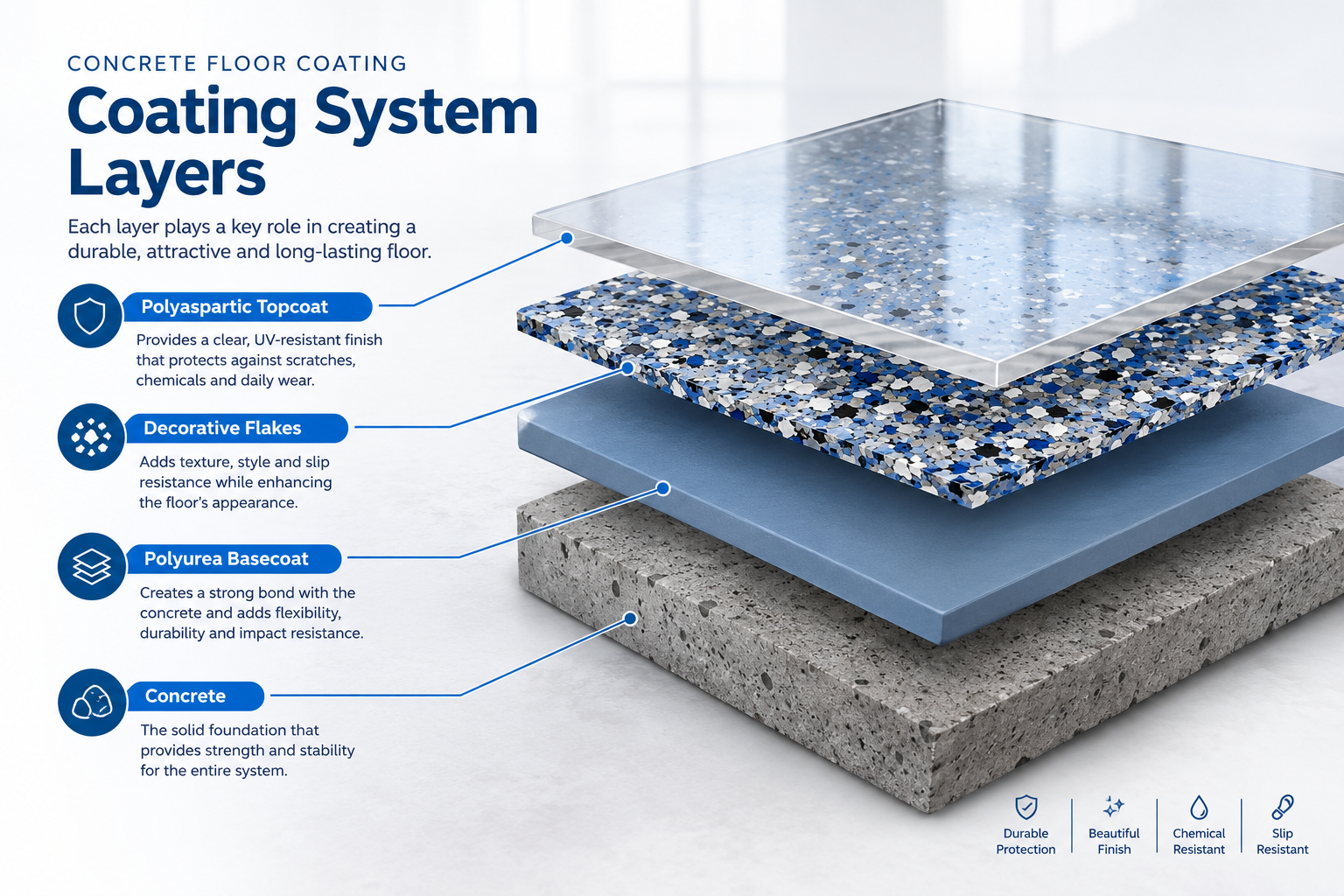
Fortress Floor Coatings installs a polyurea basecoat with a polyaspartic topcoat. Polyurea grips well to properly prepared concrete and has a little flex to it, which helps with impacts and the temperature swings you get near overhead doors. The polyaspartic layer on top handles abrasion and resists UV, so a floor next to a sunny bay door is less likely to turn yellow. Prep, traffic, and maintenance still decide how long any floor lasts, but a solid system gives the slab far better odds than bare concrete.
Resistance to Chemicals, Oil, and Spills
Every business has its own spill problem. An auto shop fights motor oil, brake fluid, and antifreeze. A brewery or restaurant kitchen deals with grease, sanitizers, and sticky syrups, while a light manufacturing space might see hydraulic fluid or solvents on a regular basis.
Heavy-duty concrete floor coatings give those liquids nowhere to go. A spill sits on top long enough for someone to grab a mop, rather than leaving a dark ring that never fully comes out. Chemical resistance does vary from product to product, so tell your installer exactly what gets used in your building before you settle on a system.
Easier Cleaning and Lower Maintenance
If you’ve ever run a hand across the shelving in a warehouse with bare floors, you already know about concrete dust. The surface slowly wears, and that fine gray powder settles on inventory, machines, and everything else. A coating stops the dusting and leaves a smooth surface that’s easy to sweep or scrub.
Facility teams tend to notice the difference quickly. Routine sweeping and a pH-neutral cleaner are usually all a coated floor needs, with no special treatments or stripping. Restaurants and other food businesses also like how much easier it is to keep a sealed floor sanitary.
A More Professional Look for Your Business
People judge a business by its floor more than they’d ever admit. Walk into a showroom with a clean, finished floor and the place feels well run. Walk into one with cracked, oil-stained concrete, and customers quietly start wondering what else has been neglected.
Coated commercial concrete flooring comes in plenty of colors and flake blends. A retail store or office might match the finish to its branding, while a service garage might go with a busier flake pattern that hides tire marks between cleanings. The space ends up looking like someone made a deliberate choice, which is exactly the impression you want to give.
Protecting the Concrete You Already Have
Tearing out and replacing a commercial slab is expensive, loud, and hard on day-to-day operations. Concrete floor protection is usually the smarter play, since a coating keeps abrasion, moisture, and chemicals off the concrete you’ve already paid for.
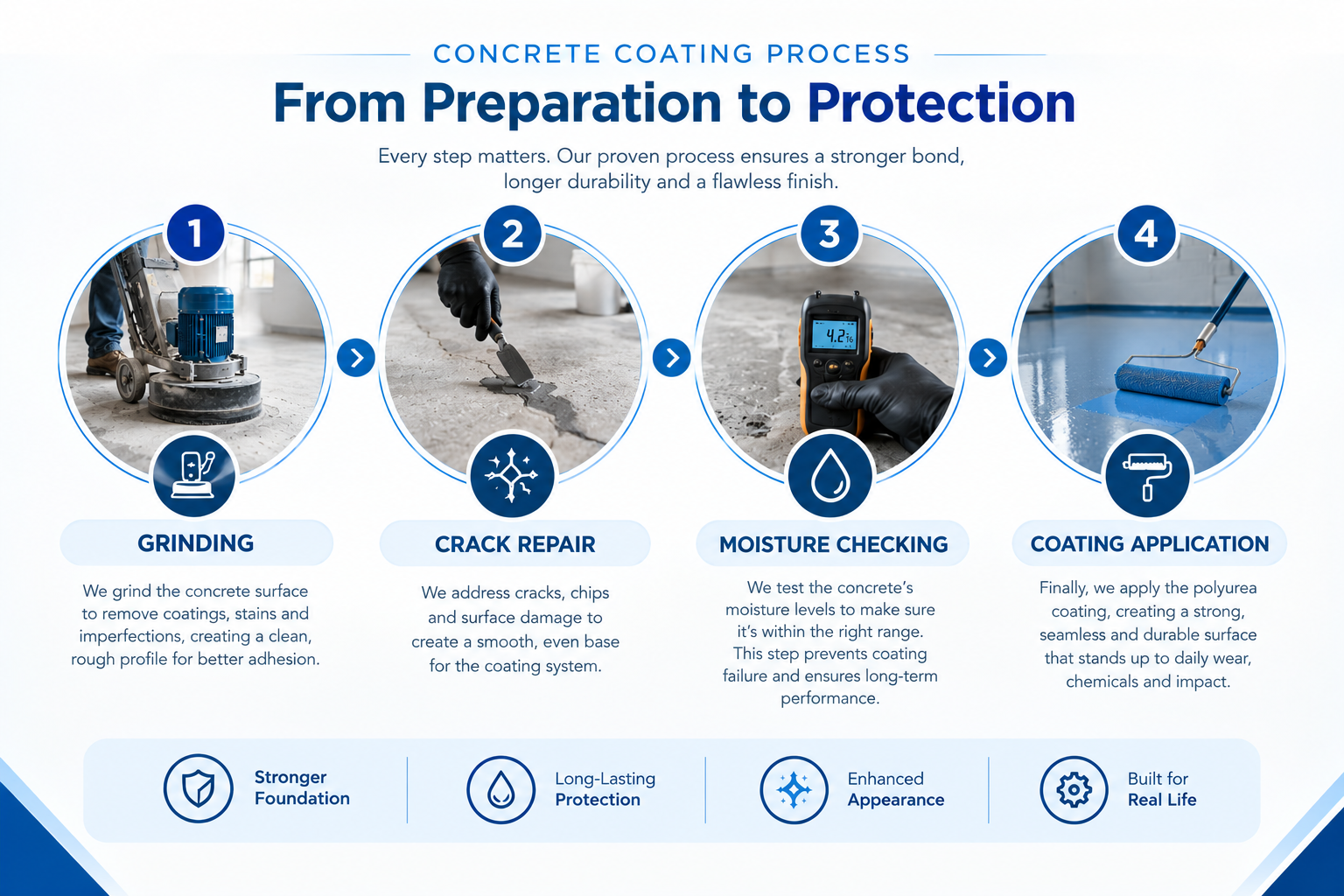
A lot of that protection comes from work you never see. Good commercial floor coating contractors spend real time grinding the surface, filling cracks and pits, and checking moisture levels before any coating goes down. Rushed prep is one of the most common reasons coatings fail early, so ask anyone you’re considering to walk you through how they handle it.
Where Commercial Concrete Floor Coatings Make the Biggest Difference
Some buildings put their floors through a lot more than others. A concrete coating for commercial spaces tends to pay off most in places like these:
- Warehouses and distribution centers with forklift and pallet traffic
- Auto repair shops, dealerships, and service bays
- Restaurants, breweries, and commercial kitchens
- Retail stores and showrooms
- Manufacturing and light industrial facilities
- Gyms, fitness centers, and recreational spaces
Each of these spaces wears a floor out differently. A walk-through before any quote, looking at traffic patterns, equipment, and where spills actually happen, tells a contractor far more than square footage ever will.
Keeping Downtime to a Minimum
Closing for a week to redo the floors isn’t realistic for most West Chester businesses, and that’s often why the project keeps getting pushed to next year. Polyurea and polyaspartic systems cure faster than many traditional coatings, so the disruption is usually shorter than owners expect. Smaller jobs can often be finished in about a day, and larger facilities can be done in sections or after hours.
Ask your installer for a realistic schedule based on your square footage and the condition of the slab. It’s also worth asking when people, vehicles, and equipment can go back on the floor, because those three answers aren’t always the same.
Choosing a Commercial Floor Coating Partner in West Chester
The product matters, but the crew putting it down matters just as much. A contractor worth hiring will come out to see the space, explain how they’ll prep it, and answer your questions about products and upkeep without dodging any of them.
Fortress Floor Coatings works with businesses throughout Chester County, West Chester included. If your floors are starting to show their age and you’re looking for a concrete floor coating near West Chester, take a look at our commercial concrete floor coatings. Setting up a time for someone to come see the space is the easiest way to find out what your floor actually needs.