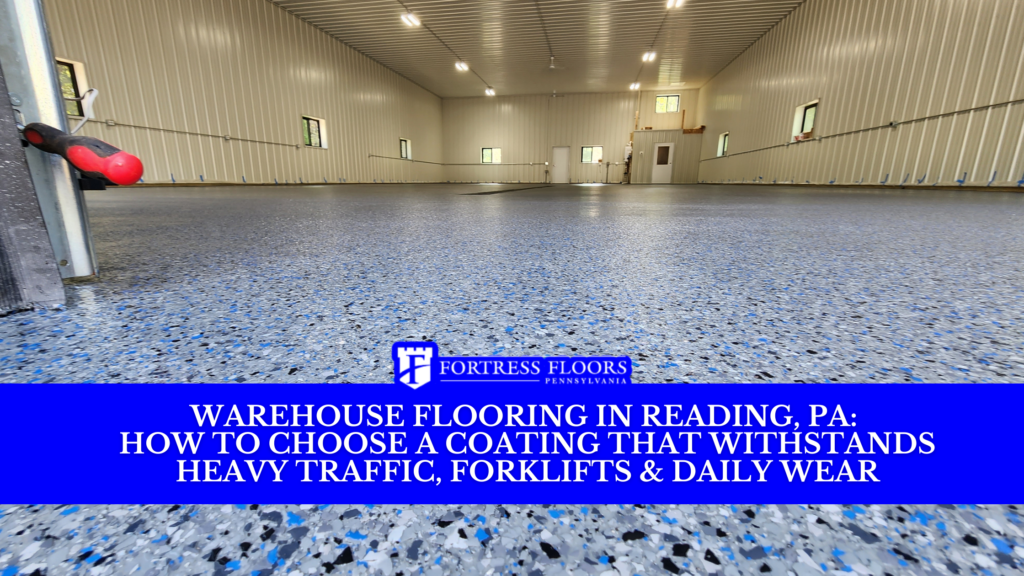
If you’ve searched “warehouse flooring near me”, chances are your current floor is already giving you trouble. Maybe it’s dusting up every time a forklift rolls through, or you’ve noticed cracks spreading near the loading dock. Either way, plain concrete just doesn’t hold up to what a working warehouse throws at it, and Reading, PA warehouses see some of the toughest daily use in the region.
Fortress Floor Coatings hears these complaints from facility managers across Pennsylvania who are dealing with worn-out or damaged concrete. This guide covers what we’ve learned about picking a coating that actually survives forklifts, pallet jacks, and the daily grind of a busy facility.
Why Does Warehouse Concrete Crack, Dust, and Wear Out So Fast?
Concrete on its own was built to hold weight, not to take a beating from tires and chains. Every turn a forklift makes grinds at the surface a little more, and a dropped pallet can chip an edge in seconds. Give it a year or two and you’ll start seeing dusting, pitting, and cracks that only get wider.
Fluids make it worse. Oil, battery acid, and shop chemicals seep into unsealed concrete and break it down from the inside. Skip a coating altogether and you’re usually looking at patch repairs, or a full floor replacement, well before the slab should have needed one.
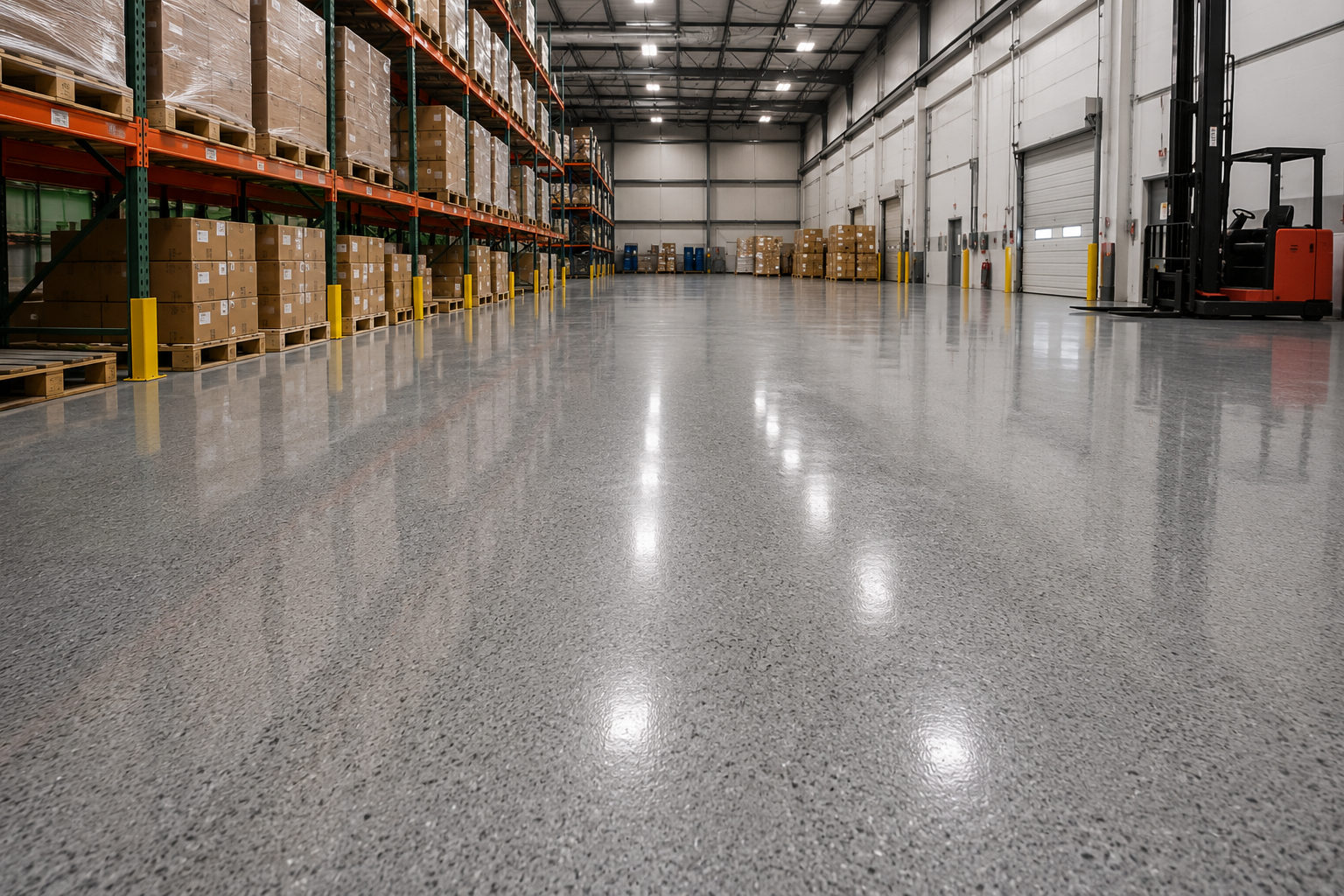
What Your Floor Actually Has to Survive
Not all commercial spaces put the same demands on a floor. A warehouse is its own animal, and the coating has to match what happens on the ground every single day.
Nonstop Forklift and Pallet Jack Traffic
Forklifts do two kinds of damage at once. Spinning tires wear the surface down through friction, and sudden stops or dropped loads hit it with straight impact. A coating needs enough hardness to shrug off the friction and enough give to absorb the impact without splitting.
Warehouse operators also need to consider safe operating conditions around forklifts. OSHA provides specific guidance on powered industrial trucks, including workplace conditions, loading docks, and safe operation.
Racking and Point Loads
Stack a few thousand pounds of inventory on a rack, and that weight funnels down through a handful of small footprints on the slab. Both the coating and the concrete underneath need real compressive strength, or you’ll see dents and crush marks show up under the legs.
Spills You Can’t Always Plan For
Hydraulic fluid, diesel, degreasers, cleaning solvents. Most warehouses deal with some combination of these on a regular basis. A good coating seals the surface so those spills sit on top and wipe up, instead of soaking straight into the slab.
Loading Dock Temperature Swings
Dock doors open and close all day long, and that means blasts of cold in January and heat in July right at the same spot on the floor. Coatings that can’t handle that kind of thermal cycling tend to crack or lift at the seams over time.
Why Polyurea and Polyaspartic Beat Epoxy for Warehouse Traffic
You’ll still see plenty of warehouses running standard epoxy floors, and it’s not a bad product for light-duty spaces. The problem shows up once real forklift traffic gets involved. Constant tire abrasion wears epoxy down faster than most facility managers expect, and it tends to crack rather than flex when it takes a hard, sudden impact. Hot tires can even soften it enough to pull it up in patches, which is the last thing you want on a floor that’s supposed to last.
Polyurea takes a different approach. It bonds deep into the concrete and adds real flexibility, so the floor can move slightly with impact and thermal stress instead of cracking under it. It’s also rated at roughly four times the strength of traditional epoxy, and it cures in hours rather than days, which matters if your facility can’t afford to shut a bay down for a weekend.
Paired with a polyaspartic top coat, the system gets even more capable. The top layer resists oil, chemicals, moisture, and UV exposure while holding a clean finish under constant forklift and pallet jack traffic. Between the two layers, you get a floor built to flex where it needs to and resist wear where it takes the most abuse.
That’s why Fortress Floor Coatings builds warehouse systems around a polyurea base coat and a polyaspartic top coat rather than epoxy. It’s the same material philosophy we use across every job we do, and it holds up in a working warehouse far longer than a traditional epoxy floor.
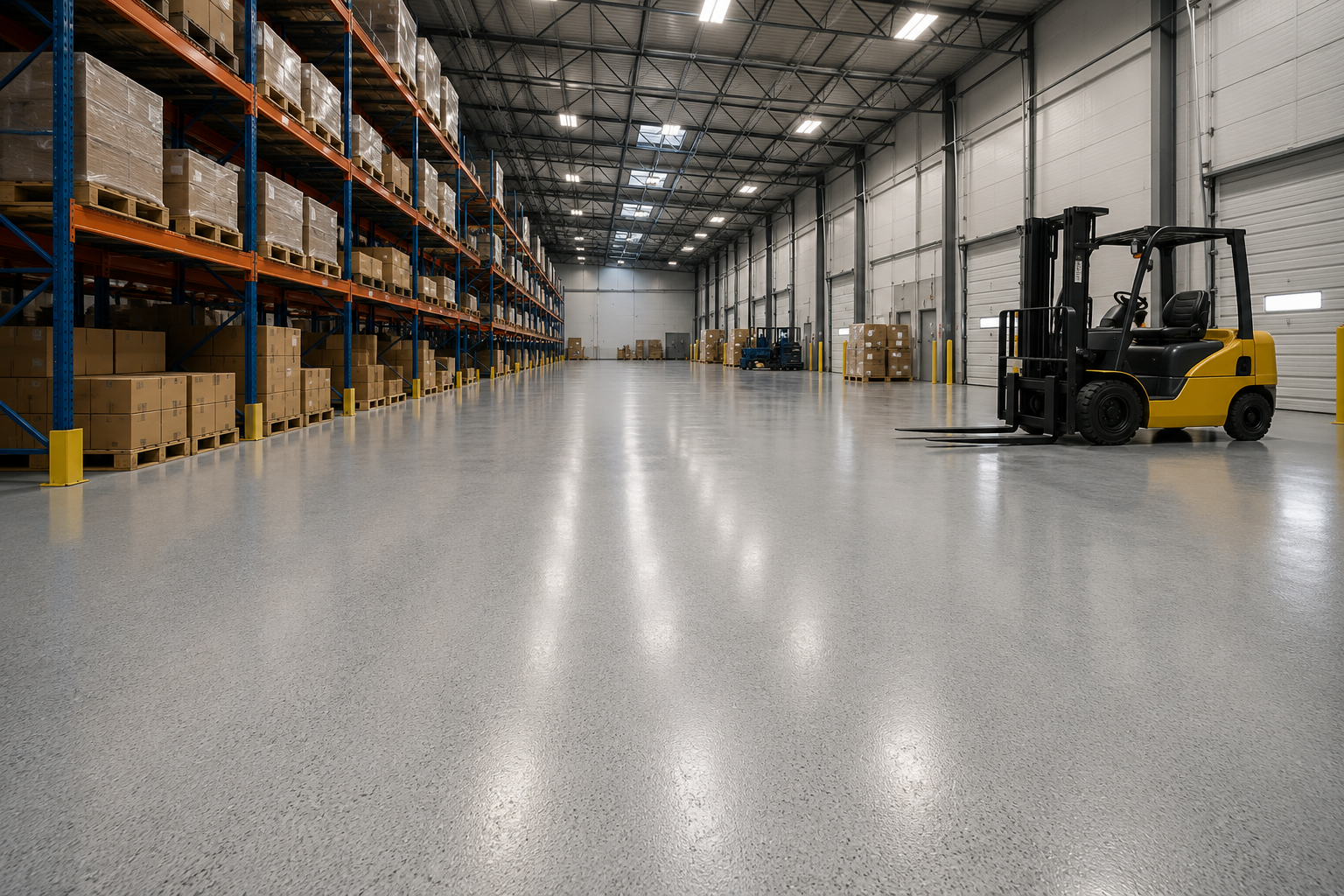
A Few Things Worth Thinking Through Before You Commit
How much traffic are you really dealing with? A facility running a couple hundred forklift passes a day needs a heavier, more abrasion-resistant build than one with occasional pallet jack use.
Can you afford to shut the floor down? If a multi-day cure isn’t an option, a fast-curing polyurea system gets you back up and running in hours. Epoxy, by comparison, can take a full day to three days before it’s ready for full traffic again.
What happens when the floor gets wet? A glossy finish looks sharp in photos, but it can turn into a hazard the moment there’s a spill. A textured or aggregate-broadcast finish gives workers and equipment something to grip.
What’s this going to cost you over ten years, not just this month? The cheapest bid up front isn’t always the cheapest floor. A system that lasts a decade or more with light upkeep often beats out a bargain coating that needs redoing every few years.
Warehouse Flooring Near Me: How We Install Your System
Reading gets real seasonal swings, and a warehouse floor here needs to expand and contract without falling apart. Half the battle happens before the coating ever goes down. Here’s how we approach every warehouse job:
Surface preparation. We grind the concrete to strip away weak, contaminated layers and open the surface for a strong bond.
Concrete repair. Cracks, joints, and any damaged sections get repaired first, so the coating has a stable base to sit on.
Polyurea base coat. This layer bonds deep into the slab and gives the floor flexibility to handle impact and movement without cracking.
Polyaspartic top coat. The final layer locks in resistance to chemicals, moisture, abrasion, and UV exposure while giving you a clean, finished surface.
Fortress Floor Coatings walks the facility first, looks at traffic patterns and load points, and checks the condition of the existing slab before recommending a system, so what goes down actually matches what your warehouse needs.
Ready to Get Your Warehouse Floor Assessed?
The right coating comes down to matching the system to your traffic, your load, and how much downtime you can live with. Get that match right, and the floor stops being something you worry about.
If you’re still typing “warehouse flooring near me” into a search bar, stop looking and start calling. Fortress Floor Coatings is family-owned and operated, and we stand behind polyurea and polyaspartic systems built to outlast traditional epoxy. Reach out through our contact page to schedule an assessment for your Reading, PA facility.