Common Mistakes Contractors Make With Polyaspartic Floor Coatings (And How to Spot Them)
Polyaspartic floor coatings have become one of the most popular upgrades for Pennsylvania homeowners looking to protect garage floors, basements, and patios. This coating cures fast, resists UV damage, and holds up against heavy daily use. A polyaspartic floor coating is only as strong as the contractor who installs it, though. Skipped steps and rushed work can turn a durable, long-lasting floor into a costly repair job within a year or two.
This guide breaks down the most common mistakes contractors make with polyaspartic floor coatings and shows homeowners exactly what to look for before and after installation.
What Makes Polyaspartic Coatings Different From Epoxy
Homeowners often compare polyaspartic coatings to epoxy since both are used for garage and basement floors. Polyaspartic coatings cure much faster, often within hours instead of days, and resist yellowing from UV exposure far better than standard epoxy. These advantages come with a tradeoff – fast curing leaves very little room for contractor error.
Cure Time and Durability Advantages
A polyaspartic coating can often go from bare concrete to a finished floor in a single day. It also resists hot tire pickup, chemical stains, and temperature swings better than epoxy alone, which makes it a strong choice for Pennsylvania’s freeze-thaw winters.
Why Proper Installation Matters More With Polyaspartic Systems
Fast cure times mean a contractor has a narrow window to apply the coating correctly. Mistakes made during application can’t always be corrected once the material sets. Homeowners benefit from knowing the warning signs before hiring a crew.
Mistake #1: Skipping or Rushing Surface Preparation
Surface preparation is the foundation of a successful floor coating. Concrete must be properly profiled so the polyaspartic material can bond correctly. Contractors who skip this step or rush through it to save time set the floor up for failure.
Why Concrete Profiling Matters
Diamond grinding opens the pores of the concrete and creates a surface the coating can grip. Acid etching is a weaker, less reliable alternative that many low-cost contractors still use. A properly ground floor bonds evenly and lasts for years, while an etched or under-prepped floor often peels within months.
Signs the Surface Was Not Prepped Correctly
Homeowners can watch for a few red flags after installation:
Bubbling or blistering across the coating
Peeling near the edges of the garage or basement floor
Uneven texture that feels rough in some spots and smooth in others
Visible dust or debris trapped under the coating
Mistake #2: Ignoring Moisture Testing
Moisture trapped inside concrete is one of the leading causes of coating failure. Pennsylvania’s humid summers and damp basements make this step especially important. A contractor who skips moisture testing is gambling with the homeowner’s investment.
Why Pennsylvania’s Climate Makes This Critical
Basements throughout Pennsylvania are prone to moisture vapor rising through concrete slabs, particularly in older homes. This moisture can push against a coating from below and cause it to bubble or detach entirely, even if the surface preparation was done well.
How to Ask Your Contractor About Moisture Vapor Testing
Homeowners should ask a direct question before signing a contract: “Do you test for moisture vapor emission before applying the coating?” A qualified contractor will explain the testing method used and share the results. A contractor who dismisses this question or skips the test entirely is a warning sign worth taking seriously.
Mistake #3: Applying Coating in the Wrong Temperature or Humidity Conditions
Polyaspartic coatings cure fast, and that speed depends heavily on temperature and humidity at the time of application. Contractors who ignore these conditions often produce a finish that cures unevenly or fails to bond properly.
Why Polyaspartic’s Fast Cure Time Is a Double-Edged Sword
A short cure window gives contractors little room to fix mistakes mid-application. Extreme heat can cause the material to set before it spreads evenly, while cold or high humidity can slow curing and weaken the bond. Experienced installers plan around Pennsylvania’s seasonal weather rather than working around it.
Questions to Ask About Weather-Dependent Scheduling
Homeowners should ask whether the installation date accounts for expected temperature and humidity. A reputable contractor monitors weather conditions and adjusts scheduling when needed, rather than installing on a fixed date regardless of conditions.
Mistake #4: Using Low-Grade or Diluted Materials
Not every product labeled “polyaspartic” delivers the same performance. Some contractors cut costs by diluting the material or blending it with cheaper resins, which weakens durability and shortens the floor’s lifespan.
How to Tell If a Contractor Is Cutting Corners on Product Quality
Ask for the manufacturer name and product data sheet before signing a contract. A contractor confident in their materials will provide this information without hesitation. Vague answers or refusal to name the product are strong signals to look elsewhere.
Why “Polyaspartic” on a Quote Does Not Always Mean Full-Strength Material
Some coatings marketed as polyaspartic actually contain only a small percentage of polyaspartic resin blended with epoxy or other fillers. This blend can look similar at first but wears down far faster under daily traffic and temperature changes.
Mistake #5: Poor Seam Work and Uneven Broadcast of Flakes or Chips
The visual finish of a polyaspartic floor says a lot about the contractor’s skill level. Poor technique during the flake or chip broadcast step leaves a floor looking patchy and unprofessional.
What a Clean, Professional Finish Should Look Like
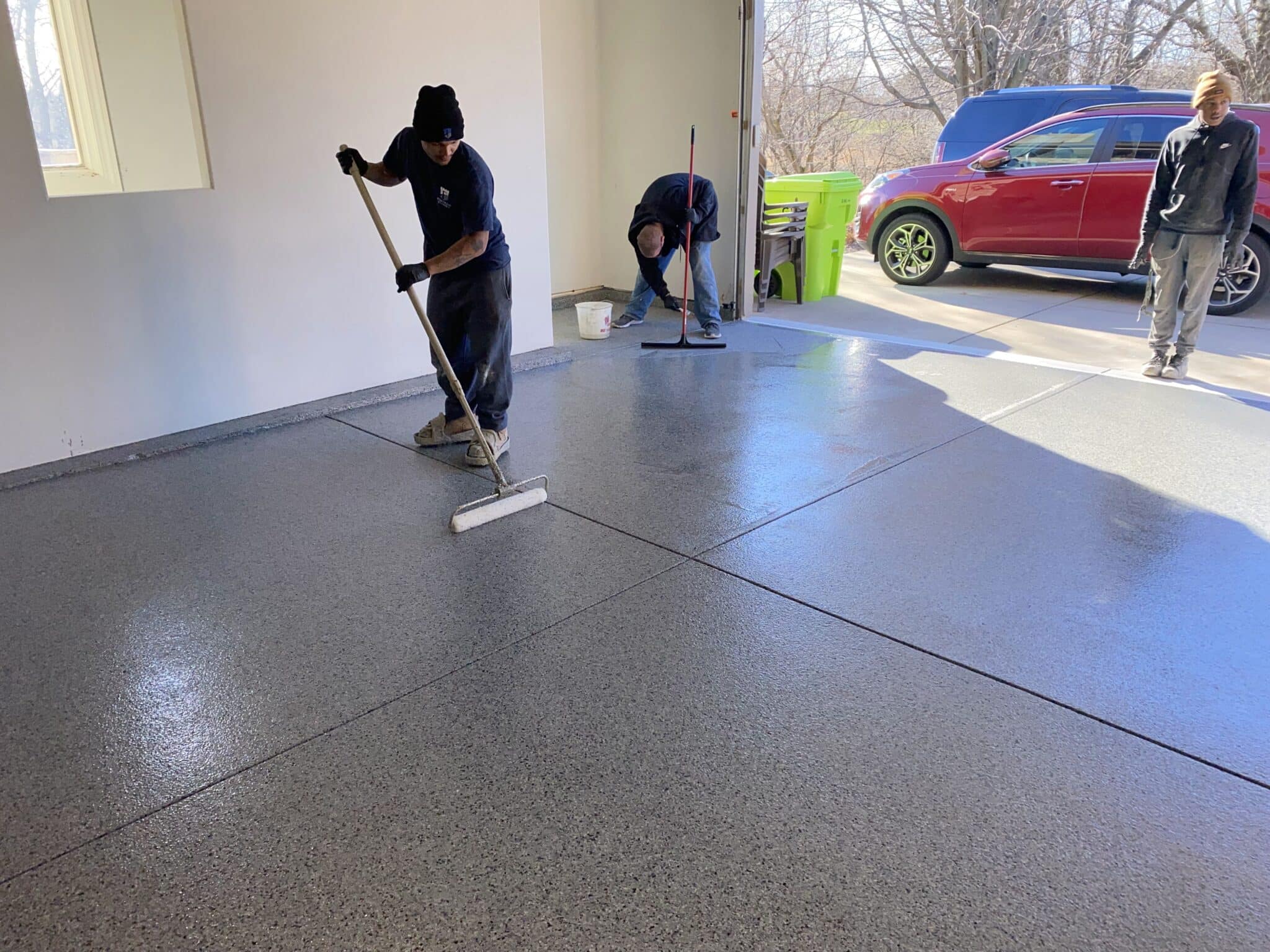
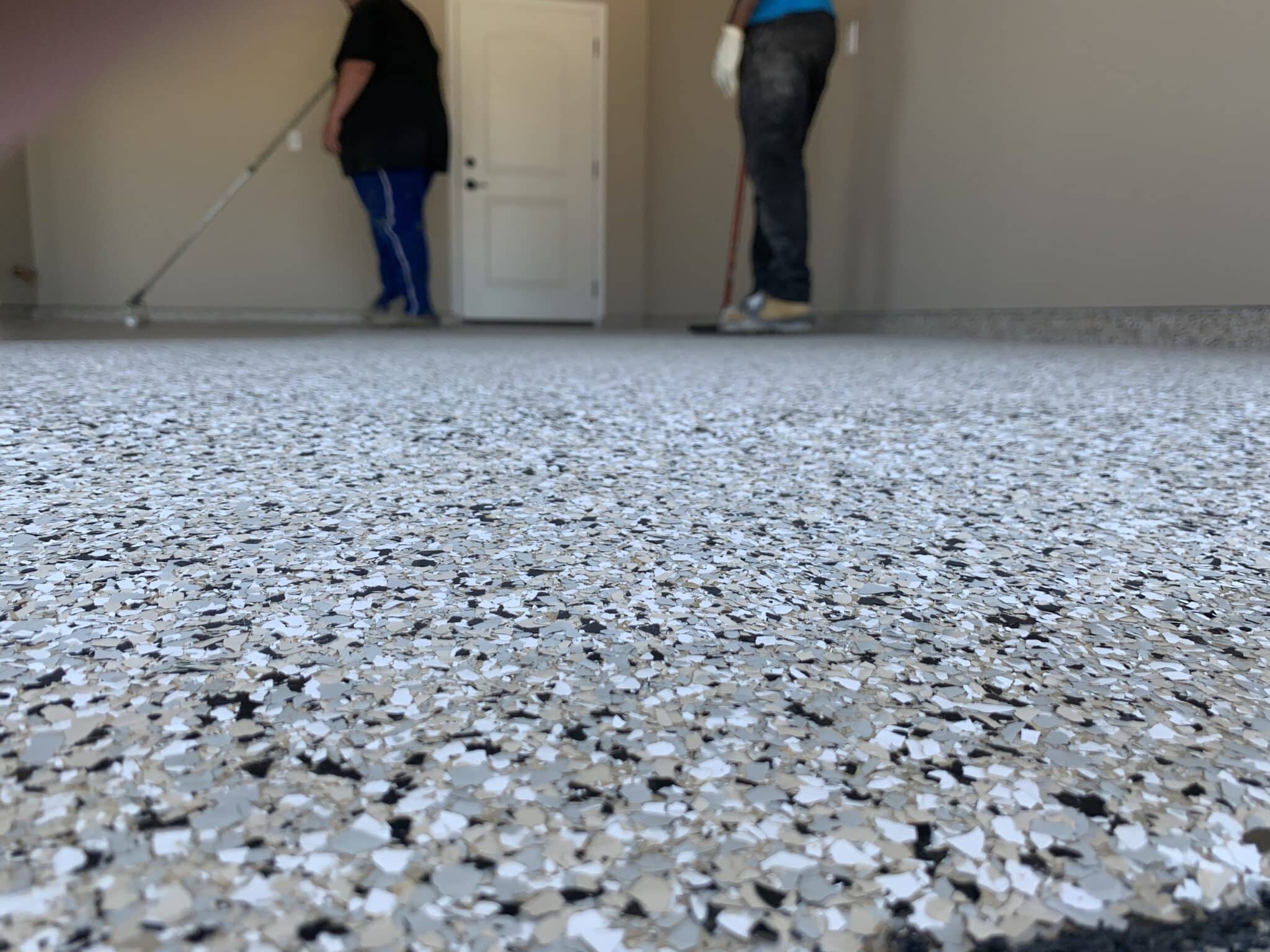
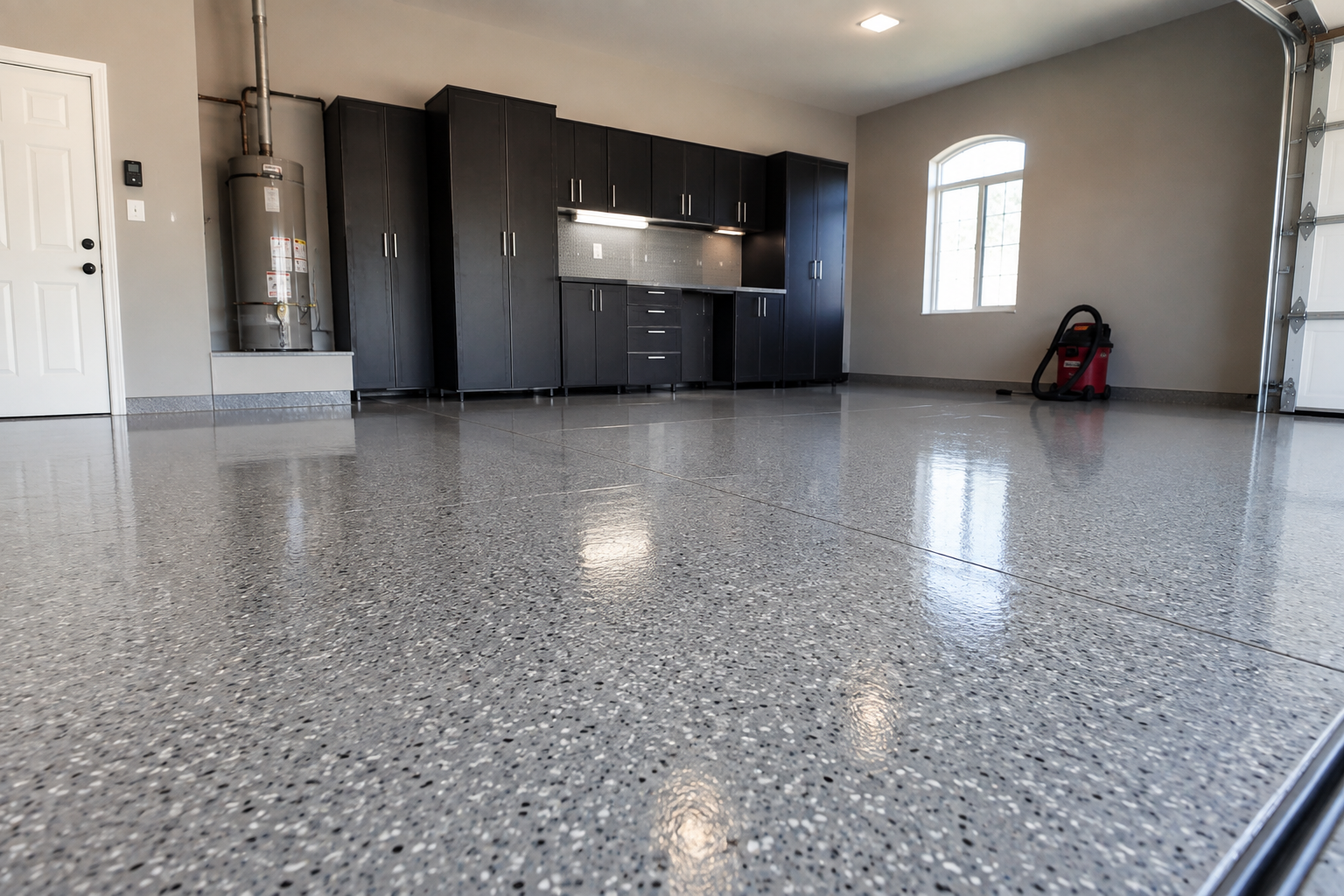
A properly installed floor has an even, consistent distribution of flakes or chips across the entire surface. Seams between sections should be nearly invisible, and the topcoat should have a uniform sheen from wall to wall.
Common Visual Red Flags After Installation
Homeowners should look closely for these issues once a floor is finished:
Clumped or sparse flake distribution in certain areas
Visible lines where sections of the coating meet
Dull patches next to glossy patches on the same floor
Rough or gritty texture underfoot in specific spots
How to Spot a Qualified Polyaspartic Contractor in Pennsylvania
Choosing the right contractor prevents most of the problems listed above before they happen. A few direct questions can reveal whether a contractor follows proper standards or cuts corners to save time.
Questions to Ask Before Hiring
What surface preparation method do you use, and can you show past examples?
Do you test for concrete moisture before installation?
What brand and grade of polyaspartic product do you install?
How do you handle scheduling around temperature and humidity?
What warranty do you provide, and what does it cover?
What a Written Warranty Should Include
A solid warranty should specify the length of coverage, what types of damage are included, and whether labor is covered in addition to materials. Contractors who avoid putting warranty terms in writing should raise concern for any homeowner comparing quotes.
Why Homeowners Trust Fortress Floor Pennsylvania
Fortress Floor Coatings builds every polyaspartic floor coating project on proper surface preparation, moisture testing, and full-strength materials designed for daily wear. The team plans installations around Pennsylvania’s weather patterns rather than working around them, which protects the durability homeowners expect from their investment.
Our Process, Materials, and Quality Standards
Every project starts with a thorough concrete assessment, including moisture testing and diamond grinding where needed. The team uses advanced polyaspartic systems built for long-term performance in both residential and commercial spaces, with a finish designed to handle heavy daily use.
Service Areas Across Pennsylvania
Fortress Floor Coatings serves homeowners across the state, bringing the same standard of surface preparation and material quality to every job site regardless of location.
Frequently Asked Questions
How Long Do Polyaspartic Floors Last If Installed Correctly?
A properly installed polyaspartic floor can last well over a decade with normal residential use. Proper surface preparation and quality materials play the largest role in determining lifespan.
Can a Bad Polyaspartic Job Be Fixed, or Does It Need to Be Redone?
Minor cosmetic issues can sometimes be repaired, but bubbling, peeling, or moisture-related failures usually require full removal and reinstallation. Addressing the root cause, whether it’s surface prep or moisture, prevents the same problem from happening again.
How Much Should a Professional Installation Cost in Pennsylvania?
Pricing varies based on square footage, surface condition, and the specific product used. Homeowners should request a detailed, itemized quote that separates labor, materials, and any additional prep work needed.
Get a Polyaspartic Floor Coating You Can Trust
A polyaspartic floor coating is a significant investment, and the contractor behind it makes all the difference. Fortress Floor Coatings offers a straightforward inspection and estimate process for homeowners who want durable, professional results without the guesswork. Contact the team today to schedule a free consultation.